Headphone power
Does the Audio-Technica ATH-M20x need an amp?
No, an amp is optional. A phone or laptop gets it loud enough, and only the very biggest peaks come near the limit. It is harder to drive than 72% of the full-size headphones we list, but not by enough to need an amp.
The numbers: a jack leaves 9.3 dB to spare at 100 dB peaks, where we look for 10 dB. Full headroom (110 dB peaks) takes about 1.09 V (25.1 mW) into 47 ohms; a jack gives about 1 V.
Little reserve from a jackIn plain words
From a phone the ATH-M20x misses our full reserve by less than 1 dB, a difference too small to matter. Full headroom takes about 1.1 V, and a phone or laptop gives about 1 V. We say an amp is optional, and not simply no, because we hold every headphone to the same rule: 10 dB spare above 100 dB peaks. In practice this is a headphone you plug in and use.
The terms: Impedance · Sensitivity · Headroom
The Audio-Technica ATH-M20x
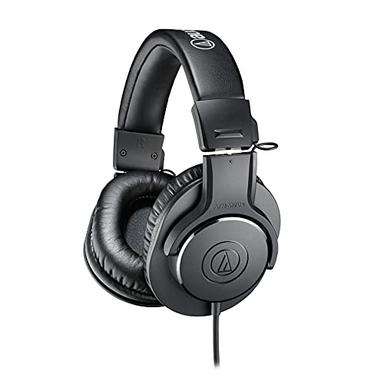
- Driver
- Dynamic
- 40mm
- Back
- Closed-back
- Impedance
- 47 Ω
- Sensitivity
- 96 dB/mW
- 109.3 dB/V at 47 ohms
Figures from Audio-Technica · How we source figures
The same figures apply to the Audio-Technica ATH-M30x and ATH-M20xSTS.
What the Audio-Technica ATH-M20x needs
| Peaks | Volts | Power | Phone or laptop jack |
|---|---|---|---|
| 95 dB | 0.19 V | 0.79 mW | Enough |
| 100 dB | 0.34 V | 2.51 mW | Little reserve |
| 105 dB | 0.61 V | 7.94 mW | Little reserve |
| 110 dB | 1.09 V | 25.1 mW | Falls short |
| Jack limit | 1.00 V | 21.3 mW | Reaches about 109 dB peaks |
Peaks are the loudest moments. We look for 10 dB in reserve above 100 dB peaks, from the makers’ own figures.
Where it sits
Harder to drive than 72% of the 790 full-size headphones we have figures for.
Amps that drive the Audio-Technica ATH-M20x
Enough power
Each has at least 10 dB over 100 dB peaks for the ATH-M20x.
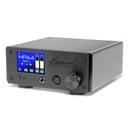 Benchmark HPA4+29.1 dB
6 W into 16 Ω · THX-888 headphone output
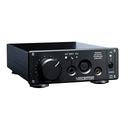 Violectric HPA V222+28.6 dB
2.7 W into 32 Ω · Headphone outputs (balanced and 6.3 mm)
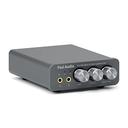 Fosi Audio K5 Pro+21.3 dB
500 mW into 32 Ω · 3.5 mm headphone output · DAC/amp
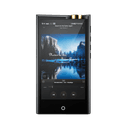 Cayin N7+21.3 dB
500 mW into 32 Ω · 4.4 mm balanced · Player
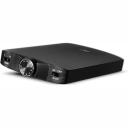 FiiO A3+18.6 dB
270 mW into 32 Ω · 3.5 mm headphone output
 Hidizs AP80 PRO MAX+17.1 dB
190 mW into 32 Ω · 4.4 mm balanced · Player
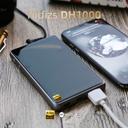 Hidizs DH1000+16.1 dB
150 mW into 32 Ω · 2.5 mm balanced
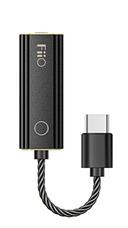 FiiO KA1+10.9 dB
45 mW into 32 Ω · 3.5 mm single-ended · DAC/amp
The line on each bar marks the 10 dB we look for. Bars show dB over 100 dB peaks.
Check any ampQuestions
Can a phone drive the ATH-M20x?
Yes, with most dongles. Phones mostly play through a USB-C or Lightning dongle now, and 31 of the 32 we have figures for have enough power for the ATH-M20x, including the FiiO KA1 and the Hidizs Sonata HD DAC Cable 1st Gen. A phone that still has a headphone socket gets it loud enough too, with less in reserve.
How much power does the ATH-M20x need?
About 0.34 V (2.51 mW) for 100 dB peaks, and about 1.09 V (25.1 mW) with the 10 dB of reserve we look for. A phone or laptop jack tops out at about 1 V. Its rated 96 dB/mW at 47 ohms is the same as 109.3 dB/V.
What amp do I need for the ATH-M20x?
You can go without one, because a phone or laptop already gets the ATH-M20x loud enough. If you add an amp, a small one will do. Anything rated for about 1.09 V into 47 ohms has full headroom. From our figures, the FiiO KA1, the Hidizs DH1000 and the Hidizs AP80 PRO MAX all clear it.
Is the ATH-M20x hard to drive?
Harder than most, though a phone still copes. It needs more voltage for 100 dB peaks than 72% of the 790 full-size headphones we have figures for, about 1.5 times what the middle one needs. Neither figure is extreme on its own, but the 47 ohm impedance and 96 dB/mW sensitivity together ask for more than most.
More answers
All headphone answers- Does the HiFiMAN Edition XS need an amp?Needs 0.34 V for 100 dB peaksLittle reserve
- Does the Røde NTH-100 need an amp?Needs 0.32 V for 100 dB peaksLittle reserve
- Does the HiFiMAN Sundara need an amp?Needs 0.38 V for 100 dB peaksLittle reserve
- Does the beyerdynamic DT 1990 Pro need an amp?Needs 0.40 V for 100 dB peaksLittle reserve
- Does the Sennheiser HD 206 need an amp?Needs 0.40 V for 100 dB peaksLittle reserve
- Does the HiFiMAN HE400se need an amp?Needs 0.45 V for 100 dB peaksLittle reserve
Save your headphones. Every amp page then shows how it pairs with them.