Which amp do your headphones need?
For most headphones, a phone adapter. It is enough for 144 of the 228 in our catalog by our rule: 100 dB peaks with 10 dB in reserve. High-impedance dynamics need voltage more than power, and only two planars need more than 20 mW. The $99 JDS Labs Atom Amp+ clears the bar for all seven of our reference headphones.
Updated 12 min read 4 picks
Who this is for
Anyone who owns headphones, or is about to, and wants to know whether the thing they plug into is holding them back. The guide covers power only: whether an amplifier can play a given headphone loud enough with something in reserve. It does not judge how amplifiers sound, and it leaves out speakers and electrostatic headphones, which need a different kind of amplifier.
The rule is the one used on every product page of this site. We aim for peaks of 100 dB SPL and want 10 dB in reserve. Headroom is how many decibels above 100 dB an amplifier’s rated output can take a given headphone: at 10 dB or more it has enough, from 0 to 10 dB it will play with little in reserve, and below 0 it falls short. For a phone adapter or a laptop socket we assume about 1 V RMS, limited to 30 mW.
By that rule, 144 of the 228 headphones and IEMs in the catalog with complete sensitivity data have enough from a phone adapter. Another 80 will play with little in reserve. Four fall short: the HiFiMAN Susvara, the discontinued HiFiMAN HE6se, the Sennheiser HD 600 and the 600 Ω beyerdynamic DT 880 Edition. If yours is one of the 144 and you hear no hiss and have volume to spare, you can stop here.
The picks
Four situations, four picks, all current products with a list price. Each comes with its headroom above 100 dB SPL into a named reference headphone, worked out from the maker’s rated output and not measured by us. Three of the four give their best figure from a balanced socket, which needs a balanced cable, so each of those also shows what the ordinary single-ended socket does. If your headphone is not one of the seven references, the worked example and the table further down will place it.
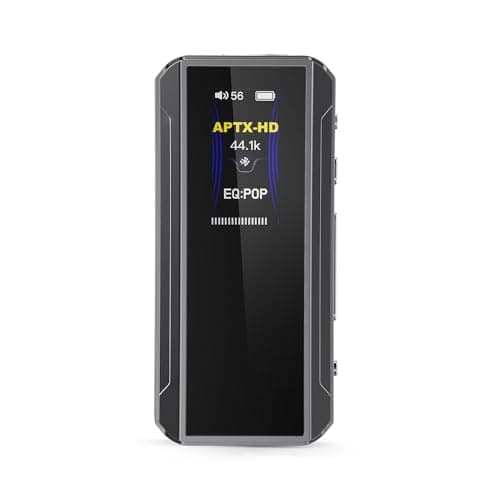
- FiiOBTR13Easy headphones from a phone
15.2 dB headroom into the Sennheiser HD 650 from the 4.4 mm balanced socket; 7.8 dB from the 3.5 mm socket; $69.99 list
A pocket Bluetooth receiver and USB DAC for when a phone’s output hisses or runs out. With a balanced cable it clears our bar for five of the seven reference headphones. Without one, the FiiO KA1 gives the HD 650 more for $20 less: 8.9 dB. Skip it for the HD 600 (9.2 dB balanced) or the Susvara (3.7 dB).
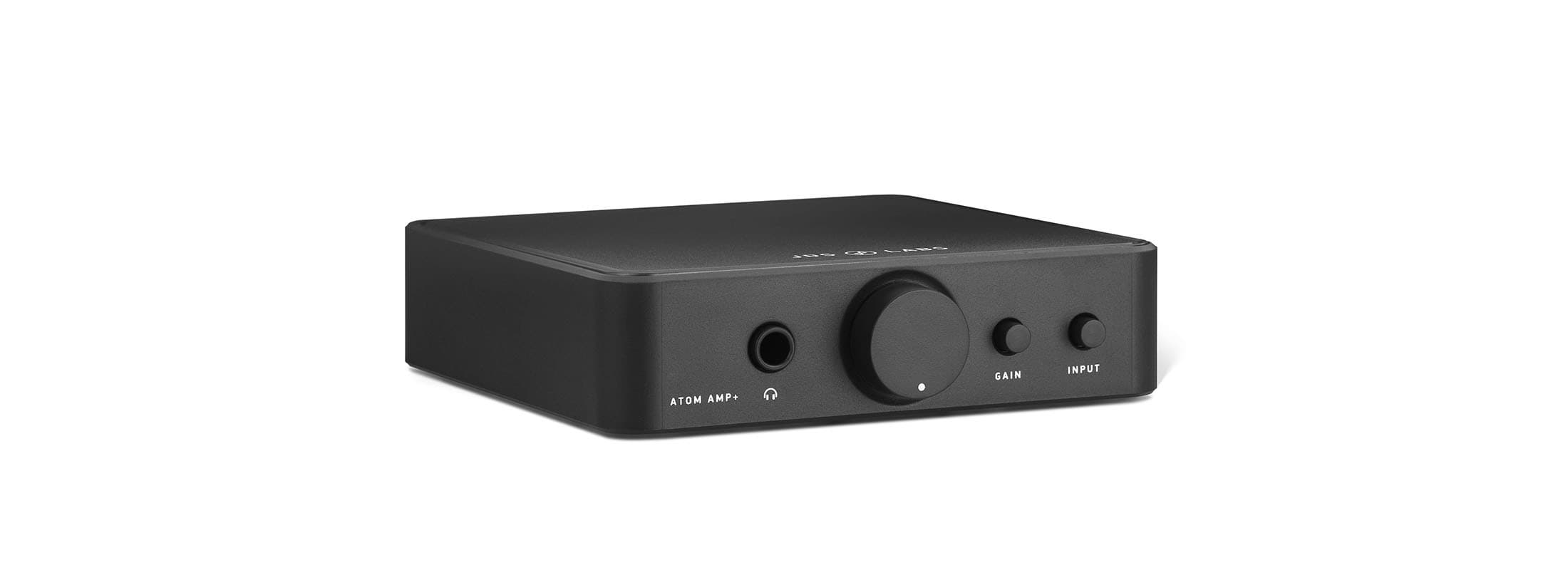
- JDS LabsAtom Amp+First desktop amp
16.1 dB headroom into the Sennheiser HD 600; 10.3 dB into the HiFiMAN Susvara, both from its one 6.35 mm single-ended output; $99 list
The cheapest current amplifier in the catalog to clear our bar for all seven reference headphones, from an ordinary 6.35 mm socket with no balanced cable. It clears the Susvara by only 0.3 dB and needs a DAC ahead of it. Skip it if you want one box: the K11 costs $31 more.
In member setups Owners
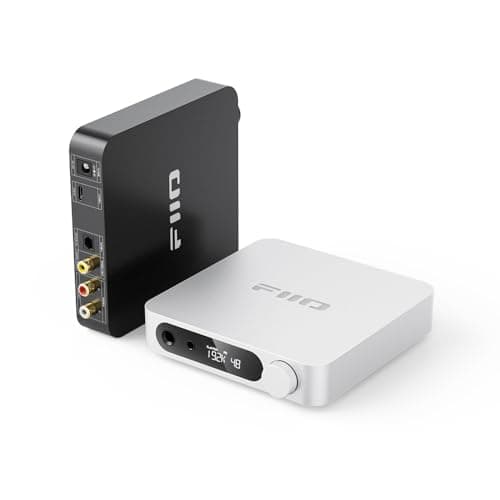
- FiiOK11All-in-one DAC and amp
From the 4.4 mm balanced socket: 15.8 dB headroom into the Sennheiser HD 600 and 11.7 dB into the HiFiMAN Susvara. From the 6.35 mm socket: 9.6 dB and 7.4 dB. $129.99 list
The cheapest DAC with a headphone output to clear all seven, but only with a balanced cable. The Fosi Audio K5 Pro is $50 less and gives the Susvara 7.3 dB; the FiiO K7, $90 more, gives the HD 600 19.3 dB. Skip it if you own a DAC.
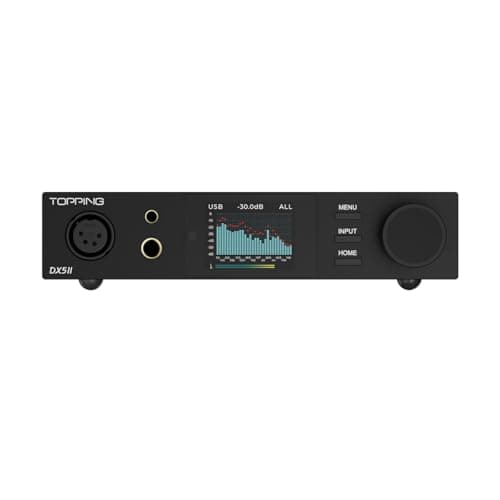
- ToppingDX5 IIFor the hardest loads
From the balanced outputs: 18.3 dB headroom into the HiFiMAN Susvara and 21.7 dB into the Sennheiser HD 600. From the 6.35 mm socket: 13.7 dB and 15.8 dB. $299 list
Among amplifiers with a list price in our catalog, only the $1,299.99 FiiO K19 gives the Susvara more. Balanced, it covers 110 dB peaks with 8.3 dB over; the Schiit Jotunheim 2 reaches 18.2 dB at $399. Skip it unless your headphone sits at the hard end of the chart below.
How much power headphones need
The median headphone in our data reaches 100 dB SPL peaks on about 1 mW. Of the 228, 106 need 1 mW or less and 214 need less than 10 mW. The chart shows 14 well-known models, easiest first, on a log scale because the hardest needs about 1,260 times the power of the easiest. (The Focal Utopia in it is the original model, now discontinued.) Look at where the 300 Ω classics sit: in the middle, which is not where their reputations put them.
Fourteen of the 228 need 10 mW or more, and 12 of those are planar magnetic. Only two need more than 20 mW: the Susvara at 50 mW and the discontinued HE6se at 45 mW. Planar does not mean hungry, though. By Audeze’s figures the LCD-X needs 0.5 mW and the LCD-2 0.8 mW.
All 23 headphones at 250 Ω or more need under 7 mW, less than many planars. What they need is voltage. The HD 600 wants 1.41 V for 100 dB and 4.47 V with the 10 dB reserve, and a phone adapter stops at about 1 V. None of the 23 reaches our bar from that source, and 19 of them have under 5 dB of headroom. That is why a 300 Ω headphone can be quiet from a laptop while drawing almost no power.
The Susvara is widely described as needing a speaker amplifier. By its maker’s figures, 83 dB/mW and 60 Ω, 100 dB peaks take 50 mW and 1.73 V, and 110 dB peaks take 500 mW and 5.5 V. The $99 JDS Labs Atom Amp+ is rated to supply that with 0.3 dB over. That is the number and the criterion; neither says anything about how an amplifier sounds with it.
Power needed for 100 dB SPL peaks, 14 well-known headphones
- Shure SE8460.04 mW
- Moondrop Aria0.2 mW
- Focal Utopia (2016)0.4 mW
- Audeze LCD-X0.5 mW
- Audeze LCD-20.79 mW
- Audio-Technica ATH-M50x1.3 mW
- Sennheiser HD 6501.7 mW
- Sennheiser HD 800 S2.1 mW
- beyerdynamic DT 990 Pro2.5 mW
- beyerdynamic DT 880 600 Ω2.5 mW
- HiFiMAN Sundara4 mW
- Sennheiser HD 6006.7 mW
- Audeze LCD-510 mW
- HiFiMAN Susvara50 mW
Bar lengths are on a log scale, so each step along is a multiple, not an equal amount.
Working out your own case
You need two numbers from the maker: impedance in ohms, and sensitivity with its unit. Take the HiFiMAN Sundara: 37 Ω and 94 dB/mW.
That sensitivity says 1 mW gives 94 dB. The target is 100 dB, which is 6 dB more. Every 10 dB is ten times the power and every 3 dB is double, so 6 dB is four times: 4 mW. Add the 10 dB reserve and it is 40 mW.
Then voltage, because an amplifier can run out of volts before it runs out of milliwatts. Multiply the power in watts by the impedance and take the square root: 0.040 times 37 is 1.48, and the square root of that is about 1.2 V. A Sundara with the full reserve wants 40 mW and 1.2 V.
A phone adapter at 1 V is 1.7 dB short of that, so the Sundara shows 8.3 dB of headroom from a phone, not 10: it will play, with little in reserve. The $69.99 FiiO BTR13 gives it 13.4 dB from its 3.5 mm socket and 16.8 dB from its balanced one. The $99 Atom Amp+ gives it 23.4 dB.
If the maker quotes dB/V the sum is shorter. The HD 600 is 97 dB at 1 V, so 100 dB needs 3 dB more voltage, 1.41 V, and the reserve takes it to 4.47 V, which is 67 mW into 300 Ω. Do not compare a dB/mW figure with a dB/V one; the glossary entry on sensitivity shows how to convert.
Then read the amplifier’s rating for the socket you will use, at an impedance at or below your headphone’s. A figure quoted at 32 Ω tells you little about 300 Ω.
Twelve amplifiers against five headphones
Find the column nearest your headphone and read down. The figures are dB of headroom above 100 dB SPL, from makers’ rated outputs, and 10 or more is enough by our rule. Each is for the amplifier’s strongest output, which is usually the balanced one and needs a balanced cable; on the three picks with both kinds of socket, the single-ended one gives 3.4 to 7.4 dB less. Rows are in price order. The 600 Ω DT 880 comes out 1.2 to 3.6 dB above the HD 600 column, and the LCD-2 is easier than the Sundara in every row.
Price and headroom are loosely related. The $299 Topping DX5 II gives the Susvara 18.3 dB, the $2,999 Benchmark HPA4 15.0 dB and the $725 Chord Mojo 2 7.7 dB; the last two are bought for other reasons. The Aria column never drops below 23 dB, so with easy IEMs power is not the question.
Across all 31 current amplifiers with a list price, every one clears the bar for the Aria and the LCD-2, 30 for the Sundara, 28 for the HD 650, 22 for the 600 Ω DT 880, 20 for the HD 600 and 17 for the Susvara.
| Amplifier | Type | List price | Moondrop Aria | Sennheiser HD 650 | Sennheiser HD 600 | HiFiMAN Sundara | HiFiMAN Susvara |
|---|---|---|---|---|---|---|---|
| FiiO KA1 | DAC/amp | $49.99 | 23.6 | 8.9 | 2.9 | 9.9 | −3.2 |
| FiiO BTR13 | DAC/amp | $69.99 | 30.5 | 15.2 | 9.2 | 16.8 | 3.7 |
| Fosi Audio K5 Pro | DAC/amp | $79.99 | 34.0 | 16.8 | 10.8 | 20.4 | 7.3 |
| JDS Labs Atom Amp+ | Amp only | $99 | 37.1 | 22.1 | 16.1 | 23.4 | 10.3 |
| FiiO K11 | DAC/amp | $129.99 | 38.5 | 21.8 | 15.8 | 24.8 | 11.7 |
| FiiO K7 | DAC/amp | $219.99 | 40.1 | 25.3 | 19.3 | 26.4 | 13.3 |
| Shanling M1 Plus | Player | $209 | 35.2 | 16.2 | 10.2 | 21.6 | 8.5 |
| iFi ZEN CAN 3 | Amp only | $229 | 39.1 | 24.2 | 18.2 | 25.5 | 12.4 |
| Topping DX5 II | DAC/amp | $299 | 45.1 | 27.7 | 21.7 | 31.4 | 18.3 |
| Schiit Jotunheim 2 | Amp only | $399 | 44.8 | 28.6 | 22.6 | 31.2 | 18.2 |
| Chord Mojo 2 | DAC/amp | $725 | 34.5 | 17.3 | 11.3 | 20.8 | 7.7 |
| Benchmark HPA4 | Amp only | $2,999 | 41.8 | 24.2 | 18.2 | 28.1 | 15.0 |
What more money buys
Past about $130, more money buys little that this rule can see. The $129.99 FiiO K11 already clears the bar for all seven reference headphones from its balanced socket, and the $99 Atom Amp+ does it from an ordinary one.
What it does buy is mostly sockets and features: balanced outputs and inputs, more digital inputs, Bluetooth, a remote control, outputs for active speakers, built-in equalization, a battery, a better volume control, a better case. Those are sound reasons to spend more. They are reasons of convenience and taste, not of power.
Headroom you never use buys nothing you can hear. An amplifier with 45 dB over an IEM spends its life with the volume control near the bottom of its travel, which is where some analog controls match their two channels least well.
What power does not tell you
Noise. The more sensitive the earphone, the more of an amplifier’s noise floor reaches you as hiss. Our product pages flag anything above 110 dB/mW, and 13 of the 228 are over that line, the Shure SE846 among them at 114 dB/mW and 9 Ω. For those a quiet output matters more than a strong one. We hold no noise figures for amplifiers, so the table cannot help; look for the maker’s figure, or listen with the music paused.
Output impedance. The impedance of a multi-driver IEM can swing widely with frequency, and an amplifier whose output impedance is more than about an eighth of the earphone’s will shift its tonal balance. For a 9 Ω earphone that asks for about 1 Ω or less. The headroom figure ignores this.
Nor does power tell you how an amplifier sounds. “Enough” by this rule means enough rated voltage and power for a loudness target, and nothing else. Some listeners hear clear differences between amplifiers that all have enough power. Others, comparing at matched levels, hear none. We report the disagreement and take no side, because nothing in this data bears on it.
How we chose
We started from the 228 headphones and IEMs in the catalog that have a maker’s impedance and a sensitivity figure with its unit recorded (205 headphones, 23 IEMs), and from the 141 amplifiers, DACs with headphone outputs and players that have a published output rating. For each headphone we worked out the voltage and power for 100 dB SPL from the maker’s sensitivity. For each amplifier we used the rating at the highest load at or below the headphone’s impedance and wrote the difference as headroom in dB. We took each amplifier’s strongest output. On the FiiO BTR13, FiiO K11 and Topping DX5 II that is the balanced socket, so you need a balanced cable to get the figures in the table; their single-ended figures are given with the picks. The seven reference headphones are the Moondrop Aria, the Sennheiser HD 650 and HD 600, the 600 Ω beyerdynamic DT 880 Edition, the Audeze LCD-2 and the HiFiMAN Sundara and Susvara: an easy IEM, 300 Ω and 600 Ω dynamics, and planars from easy to the hardest in the catalog.
Picks and the table come from the 31 of those 141 that are current and have a list price. Six are discontinued and 104 have no list price in the catalog, which leaves out many well-known amplifiers, so the data here is thin. For the first three picks we took the cheapest product that cleared 10 dB for the job described; for the hardest loads we took the most Susvara headroom under $1,000. The table holds the four picks and eight more chosen to span $49.99 to $2,999 and the three product types, including each pick’s nearest rival; it is not a ranking.
Every figure is a maker’s rating, not a measurement of ours, and makers quote output at different distortion levels. Where a maker gives no rating at or below a headphone’s impedance we show no figure; 4 of the 141 lack one for at least one reference headphone. Where the rating is at a lower impedance than the headphone, we assume the same voltage is available into the higher one. Sennheiser’s own figures put the HD 600 at 97 dB and the HD 650 at 103 dB for 1 V, a 6 dB gap between close relatives; we used them as published.
The target is a policy. Peaks of 100 dB with 10 dB in reserve suit most music at moderate levels; if you listen louder, or boost the bass with equalization, you need more, decibel for decibel. The reserve is for brief peaks: long listening at high levels damages hearing permanently.
Common questions
Do 300 ohm headphones need an amp?
Usually yes, for voltage and not for power. All 23 headphones in our catalog at 250 Ω or more need under 7 mW for 100 dB peaks, but none reaches our 10 dB reserve from the 1 V of a phone adapter. A Sennheiser HD 650 gets 3.0 dB from that source, 7.8 dB from the 3.5 mm socket of a $69.99 FiiO BTR13 and 15.2 dB from its balanced socket.
How many watts does the HiFiMAN Susvara need?
About half a watt for 110 dB peaks, by its maker’s figures. At 83 dB/mW and 60 Ω the HiFiMAN Susvara needs 50 mW and 1.73 V for 100 dB, and ten times the power for 110 dB. Of the 31 current amplifiers with a list price in our catalog, 17 are rated to supply that from their strongest output, starting at $99. Whether more power than that changes the sound is something listeners disagree on.
Can an amplifier be too powerful for headphones?
Not by its rating, because the volume control sets what reaches the headphone, but surplus has costs. With sensitive IEMs a powerful amplifier leaves a narrow usable range on the volume control, and any hiss in its output is easier to hear. A slip of the control is also louder. Start at minimum volume whenever you change headphones.
Is a dongle enough for planar headphones?
For about half, by our rule. Of the 25 planars in our data at 32 Ω or more, a $49.99 FiiO KA1 gives 12 at least 10 dB of headroom and 11 less than that, and two fall short of 100 dB peaks. The Audeze LCD-2 gets 14.1 dB and the HiFiMAN Sundara 9.9 dB. FiiO gives no rating below 32 Ω, where another 31 planars sit. Check the sensitivity figure, not the driver type.