Headphone power & amp calculator
Will it drive?
Pick your headphones. Every amp in our catalog shows how much power it has to spare, from the maker’s own figures.
Loudest peaks you play at
Plus 10 dB in reserve, the rule used on every gear page.
Your headphones
408 with power data
The pairing
Reference source
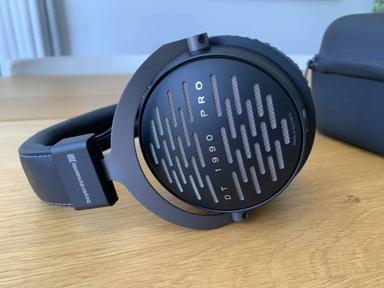
250 Ω · 102 dB/mW
About 1 V, 30 mW at most
+8.0 dB
headroom at 100 dB peaks
Plays, with little in reserve
Reaches 100 dB peaks, but with less than our 10 dB reserve. Fine at normal levels.
Amps
141 with power figures
New amps join the list as their makers’ figures are checked.
From our catalog
Phone adapter
308 of 408
headphones and IEMs play loud enough from a phone adapter, with 10 dB in reserve.
Wired up in members' setups
- Sennheiser HD 650 + JDS Labs Atom Amp+
- Sennheiser HD 650 + FiiO KA1
- beyerdynamic DT 1990 Pro + FiiO KA1
- HiFiMAN Susvara + Ferrum OOR + HYPSOS
Save your headphones. Every amp page then shows how it pairs with them.
Headphone sensitivity converter: dB/mW to dB/V
Makers quote sensitivity in one unit or the other. The two only match at 1000 ohms, where one volt is one milliwatt, so you need the impedance to compare headphones fairly.
97 dB/mW at 300 Ω is 102.2 dB/V
Questions
Do I need an amp for my headphones?
Often not. 308 of the 408 headphones and IEMs in our catalog play loud enough from a phone adapter, with 10 dB in reserve. Low-sensitivity or high-impedance models, such as planar magnetic headphones and 300 ohm dynamic ones, usually want an amp. Pick yours in the calculator and the phone jack shows its verdict first.
How much power do my headphones need?
It depends on sensitivity and impedance. At 100 dB peaks most headphones need well under a watt, while the hardest in our catalog, the Final Audio DX6000, needs about 0.5 W for 110 dB peaks. The calculator turns your headphones' figures into the power needed at the peak level you choose, then compares it with each amp's rated output.
What is the difference between dB/mW and dB/V?
Both say how loud headphones play for a given input. dB/mW is the level you get from one milliwatt, and dB/V is the level you get from one volt. The two only match at 1000 ohms, where one volt into the load is one milliwatt, so converting needs the impedance. Add 10 times the base 10 log of 1000 divided by the impedance to a dB/mW figure to get dB/V.
Can my amp drive my headphones?
It can if its rated output at your headphones’ impedance covers the power they need at your peak level, plus 10 dB in reserve for dynamics. The calculator shows that as enough, little reserve or falls short for every amp it has figures for. Where an amp has no figure at that load, we say so instead of guessing.
Where do the amp figures come from?
They come from the amp makers’ own published specifications, with the source linked on each amp page, and from the headphone makers for sensitivity and impedance. We do not measure them ourselves and we do not estimate missing figures. New amps join the list as their makers’ figures are checked, so an amp can be missing for now.