Best value DACs
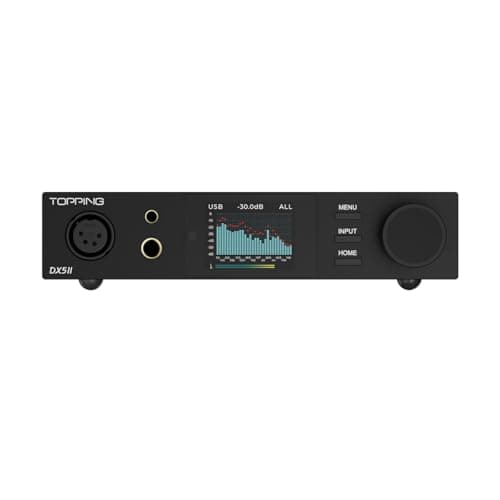
Spend about $100 to $300 and choose by connections. All 16 current DACs with a list price in our catalog measure 110 dB SINAD or more, at about $100 to $14,900, so the measurement does not separate them. The Topping DX3 Pro+ suits headphones, the Fosi Audio ZD3 speakers or a TV, and the Topping DX5 II both.
Updated 12 min read 5 picks
Who this is for
Anyone buying a first separate DAC, or wondering whether the one they own is the weak point. The guide ranks nothing by sound. It uses one published measurement, SINAD, as a bar to clear, finds that every candidate clears it, and then sorts them by what they connect to.
You may not need one. A separate DAC helps when a laptop or phone output hisses, runs out of volume or has no analog output at all. If none of those apply, expect a small difference or none; headphones and speakers change the sound far more.
It is not for readers who have listened to a particular DAC and prefer it. Nothing here argues with that, and the section on Chord and ladder designs says why. Nor can it speak for the many DACs never independently measured: we hold a figure for 38.
The picks
Five roles, five picks, each a current product with a list price. All five measure at least 20 dB past the roughly 90 dB our glossary gives as the level generally regarded as transparent, so none is here for its figure. Each is here for what plugs into it and what it feeds, checked against its maker’s page. Beside each figure is the output it was measured on, which the next section explains.
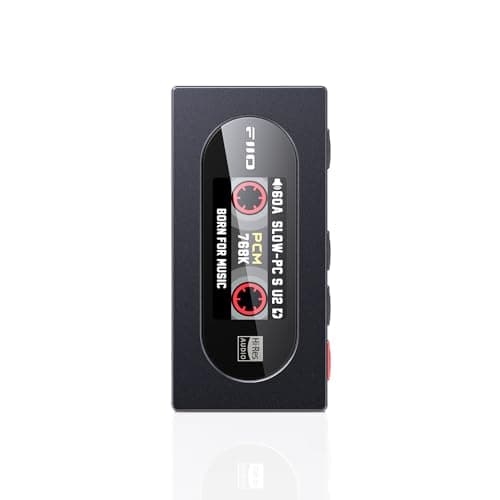
- FiiOKA15In a pocket, for headphones
115 dB SINAD in published measurements (headphone output); about $100
A USB-C dongle with 3.5 mm and 4.4 mm headphone outputs and volume buttons, for a phone or laptop whose own socket hisses, runs out of volume or does not exist. Drawback: it has no line output and no Bluetooth, so headphones are all it does. Skip it if the DAC will live on a desk.
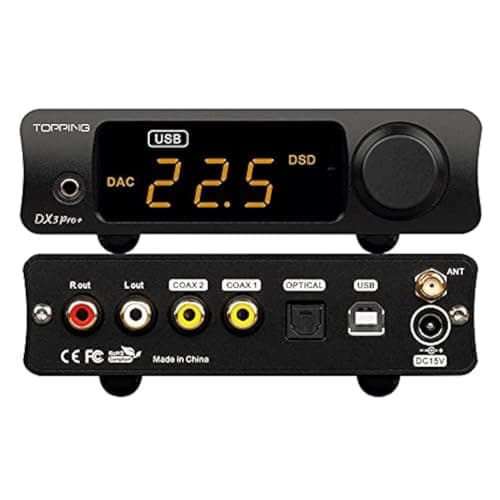
- ToppingDX3 Pro+Headphones at a desk
117 dB SINAD in published measurements (line output); $139 on the maker’s store, $199 elsewhere
A desktop DAC with a headphone amplifier built in, Bluetooth with LDAC for a phone, and a remote control. Drawback: it dates from 2021, we could not confirm any balanced socket on it, and its regular price depends on where you look. Skip it if you only feed speakers; the ZD3 has the inputs for that.
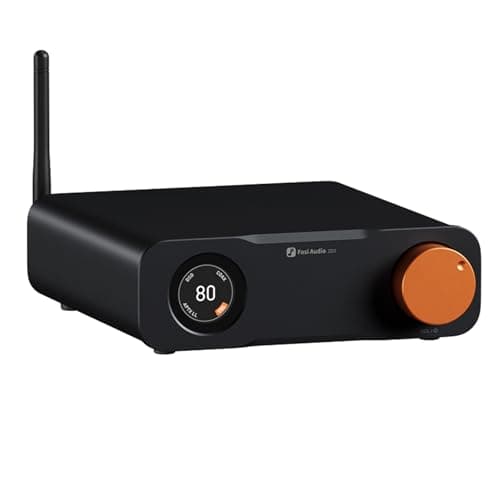
- Fosi AudioZD3Speakers or a TV
117 dB SINAD in published measurements (balanced output at 4 V); $179.99 list
The only DAC in our data with HDMI ARC, so a TV can join USB, optical, coaxial and Bluetooth sources. RCA and XLR outputs, a volume control and a remote let it feed active speakers directly. Drawback: no headphone output. Skip it if headphones are the point; the ZH3 has the sockets.
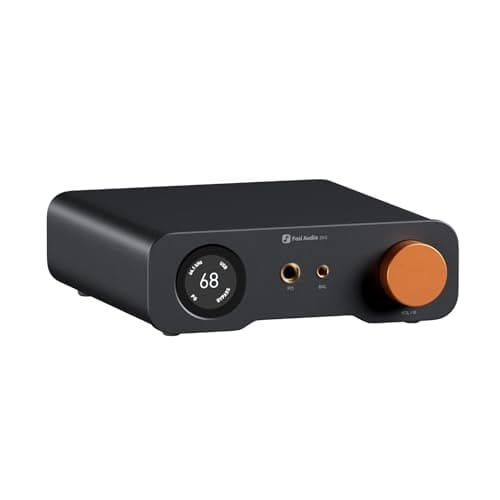
- Fosi AudioZH3Headphones and speakers
113 dB SINAD in published measurements (headphone output); $199.99 list
For a desk with both: 6.35 mm and 4.4 mm headphone outputs beside RCA and XLR line outputs, fed by USB, optical, coaxial or an analog RCA input. Drawback: no Bluetooth. Skip it if a phone across the room is one of your sources; the DX5 II has the same kinds of output and adds that.
- ToppingDX5 IIHeadphones, speakers and Bluetooth
122 dB SINAD in published measurements (balanced output at 4 V); $299 list
Headphone outputs in three sizes (6.35 mm, 4.4 mm and 4-pin XLR), RCA and XLR line outputs, Bluetooth with LDAC, and a preamp mode with volume control and remote. It is also a pick in our amplifier guide. Drawback: about $100 more than the ZH3. Skip it unless you will use the Bluetooth or the preamp mode.
What the measurements show
Every current model in the chart sits at 110 dB or more, which is 20 dB beyond the roughly 90 dB treated as transparent, at list prices from about $100 to $14,900. That is the one finding we lean on. The chart plots list price against published SINAD for 29 DACs: the 16 current models and 13 discontinued or superseded ones, shown as context. Only the five picks are labeled, and the price axis is logarithmic.
Do not read it as a ranking. The figures were not taken under one condition: some on a line output at 2 V, some at 4 V on balanced outputs, some on a headphone output. Output level and output type move the figure by several decibels, so a gap of a few decibels between two products here is within what the test conditions alone can produce. We do not rank on it.
So the roughly $100 FiiO KA15 at 115 dB and the $14,900 Chord DAVE at 110 dB tell you one thing between them: both are far past the bar, as is everything priced in between. Whether anything past that bar can be heard is argued, usually at length.
One pattern gets a mention and a warning. Leave out the four Chord models and the highest figures sit at higher prices: 112 to 117 dB for the seven models under $250, 122 or 123 dB for three of the five from $299 up. At least two of those three were measured at 4 V on balanced outputs and at least three of the cheaper models were not, so we build nothing on it.
The 13 discontinued models sit in the same band: all are above 100 dB, and 11 are at 112 dB or more.
List price against published SINAD, 29 DACs
SINAD (dB)
List price (USD, log scale)
| Product | List price (USD, log scale) | SINAD (dB) |
|---|---|---|
| FiiO KA15 | 99.99 | 115 |
| JDS Labs Atom DAC+ (discontinued) | 109 | 112 |
| Topping D10s | 109 | 112 |
| Topping DX3 Pro+ | 139 | 117 |
| Topping E30 (discontinued) | 149 | 112 |
| Fosi Audio ZD3 | 179.99 | 117 |
| Schiit Modius (discontinued) | 199 | 114 |
| Fosi Audio K7 | 199.99 | 116 |
| Fosi Audio ZH3 | 199.99 | 113 |
| FiiO K7 | 219.99 | 114 |
| Topping D50s (discontinued) | 249.99 | 112 |
| Topping DX5 II | 299 | 122 |
| Topping E70 (discontinued) | 349 | 123 |
| SMSL SU-9 (discontinued) | 449 | 121 |
| JDS Labs Element III (discontinued) | 449 | 113 |
| SMSL DO200 (discontinued) | 489 | 121 |
| JDS Labs Element IV | 549 | 118 |
| Topping D90SE (discontinued) | 599 | 123 |
| Chord Mojo 2 | 725 | 110 |
| Topping D90 (discontinued) | 749.99 | 120.5 |
| Denafrips Ares II (discontinued) | 750 | 103 |
| Topping D90 III Sabre | 899 | 123 |
| RME ADI-2 DAC FS | 1,299 | 115 |
| Gustard X26 Pro (discontinued) | 1,499.99 | 121 |
| Chord Qutest | 1,625 | 114 |
| Topping D900 | 1,799 | 122 |
| Bryston BDA-2 (discontinued) | 2,395 | 106 |
| Chord Hugo 2 | 2,595 | 112 |
| Chord DAVE | 14,900 | 110 |
What each step up in price buys
About $100 buys a dongle. The KA15 goes in a pocket and drives headphones, and that is the whole of its job. Our data records no sockets for the $109 Topping D10s, so we cannot place it.
About $140 to $220 buys a box for the desk and a choice of sockets. Between them the DX3 Pro+, the three Fosi Audio models and the FiiO K7 offer Bluetooth, HDMI ARC, XLR line outputs, 4.4 mm headphone sockets and a microphone input. No one of them has all five, which is why three picks come from this band.
$299 buys most of that in one case, the DX5 II.
Above $299, price and socket count part company. The $549 JDS Labs Element IV lists two inputs, USB-C and optical, with a 6.35 mm headphone output and an RCA preamp output. The RME ADI-2 DAC FS, at about $1,300, lists USB, optical and coaxial inputs, XLR and RCA outputs and a headphone output. The Chord Qutest, at about $1,600, lists RCA outputs and no headphone output.
Our data cannot say what those three cost more for. It holds sockets, prices and one measurement, and nothing on casework, controls, software or how long a maker supports a product. Their product pages and members’ reviews are the place to look.
What matters once the measurements are this good
Three questions about your own setup decide more than any figure in the table.
What will feed it. A computer or phone connects by USB. A TV usually offers optical or HDMI ARC, a CD transport or streamer often coaxial, and a phone across the room Bluetooth. Count the sources you own and check that each has a matching input. Of the 16 current models, Bluetooth is confirmed on six and HDMI ARC is listed on one.
What it will feed. Headphones need a headphone output, which is confirmed on 11 of the 16. A DAC with line outputs alone, such as the Qutest, needs a headphone amplifier after it. An integrated amplifier or receiver needs only a pair of RCA line outputs. Active speakers and power amplifiers raise the third question.
Who sets the volume. When a DAC feeds active speakers or a power amplifier directly, its volume control may be the only one in the system, so it has to exist and you have to like using it. One is confirmed on nine of the 16. Into an integrated amplifier you will never touch it.
Balanced XLR outputs, listed on six of the 16, reject hum and interference over long cable runs. Across a desk on a short RCA cable they rarely change anything.
If the DAC will also drive your headphones, its amplifier matters as much as its converter. Our guide to headphone amplifiers works out how much power a given headphone needs.
The converter chip does not make the list. Our data names one for 11 of the 16, from AKM, from ESS and, in three Chord models, an FPGA, and all 11 clear 110 dB. The chip is merely the part that gets its own forum threads. Nor do the last few decibels make it: test conditions can account for them.
Chord and ladder designs
Four of the 16 current models are Chord designs, at about $725 to $14,900, with published figures of 110 to 114 dB. Those figures were taken at least three ways: the Qutest on its line output at 2 V, the DAVE at 4 V on its balanced outputs and the Mojo 2 on its headphone output. For three of the four our data lists an FPGA, a programmable chip running the maker’s own conversion design, where most others list a bought-in converter chip. Among discontinued models, the Denafrips Ares II is built from discrete resistor ladders. Its published figure is 103 dB, and we do not know the conditions.
SINAD says how far a test tone stands above the noise and distortion a device adds to it, at one frequency and one level. It does not describe how a device behaves at low levels or at other frequencies, and two DACs with the same figure can differ there.
Supporters describe ladder DACs as sounding more natural. Other listeners, comparing at matched volume, hear no difference between competent DACs. Every figure in this section is past the roughly 90 dB generally regarded as transparent, so the measurement does not settle the argument, and we take no side. If one of these designs appeals, listen at matched volume and buy with a return period.
The 16 current DACs with a list price
In price order. The third column is the output each published figure was taken on, where we know it. Prices are regular prices, not sale prices. Four more DACs with a measurement appear to be on sale but have no list price in our catalog, so they are left out: the FiiO KA11, FiiO K5 Pro, Hidizs S8 and JCally JM20.
| DAC | SINAD | Measured on | List price | Year |
|---|---|---|---|---|
| FiiO KA15 | 115 dB | Headphone output | $99.99 | 2024 |
| Topping D10s | 112 dB | Not recorded | $109 | 2020 |
| Topping DX3 Pro+ | 117 dB | Line output | $139 | 2021 |
| Fosi Audio ZD3 | 117 dB | Balanced, 4 V | $179.99 | 2024 |
| Fosi Audio K7 | 116 dB | Line, 2 V | $199.99 | 2025 |
| Fosi Audio ZH3 | 113 dB | Headphone output | $199.99 | 2025 |
| FiiO K7 | 114 dB | Not recorded | $219.99 | 2022 |
| Topping DX5 II | 122 dB | Balanced, 4 V | $299 | 2025 |
| JDS Labs Element IV | 118 dB | Line, 2 V | $549 | Not recorded |
| Chord Mojo 2 | 110 dB | Headphone output | $725 | 2022 |
| Topping D90 III Sabre | 123 dB | Balanced, 4 V | $899 | 2023 |
| RME ADI-2 DAC FS | 115 dB | Balanced, 4 V | $1,299 | 2019 |
| Chord Qutest | 114 dB | Line, 2 V | $1,625 | 2018 |
| Topping D900 | 122 dB | Not recorded | $1,799 | 2025 |
| Chord Hugo 2 | 112 dB | Not recorded | $2,595 | 2017 |
| Chord DAVE | 110 dB | Balanced, 4 V | $14,900 | Not recorded |
How we chose
The catalog holds a measured SINAD for 38 DACs. Thirty have a list price, and 16 of those are current: not marked discontinued in the catalog, and not found withdrawn or superseded when we checked each against its maker’s site in November 2026. Picks and the table come from those 16. The other 14 with a price are discontinued or superseded, and 13 of them appear in the chart as context. Eight have no list price and are in neither.
The figures are independently published measurements gathered in the catalog, not tests of ours, and they were not taken under one condition. Each is one reading at one frequency and one level, but the level and the output vary: a line output at 2 V for some products, balanced outputs at 4 V for others, a headphone output where a product has no line output or where that is what was tested. Those choices move the figure by several decibels, so differences of a few decibels between two products here are within what the test conditions alone can produce. We do not rank on them.
Two much lower figures were set aside as not comparable: one taken on a headphone output into a high-impedance load, at a level the test itself says is not the product’s best, and one at a high output level where the product does better lower down. The first, a discontinued model, is left off the chart; the second has no list price and was never on it.
Most DACs on sale have never been independently measured, so absence from this guide says nothing against a product; it means only that we hold no figure for it. Sixteen current models from six makers is thin data, and nine of the 16 come from two makers, Topping and Chord.
List prices are the regular prices we found on makers’ stores or at authorized retailers in November 2026, in US dollars; where a store showed a sale price beside a crossed-out one, we took the crossed-out one. Some makers publish no US price. FiiO shows none for the KA15, which launched at $109.99 and is $99.99 at an authorized retailer. The Chord and RME prices come from retailers, which differ, and the Topping DX3 Pro+ is $139 on Topping’s store and $199, its 2021 launch price, elsewhere. Street prices differ again, so we call no product the cheapest. For discontinued models the price is the last list price we could find, and several could not be confirmed.
Features come from the catalog’s input and output fields and from makers’ pages, checked in November 2026. Where neither confirmed a feature, we did not state it. Each pick is the model whose confirmed connections fit one job: headphones from a pocket, headphones at a desk, speakers or a TV, headphones and speakers, and the same with Bluetooth. No pick was chosen for its figure, since all 16 clear 110 dB. The 90 dB reference point is the one in our glossary’s SINAD entry.
Common questions
How much should I spend on a DAC?
About $100 to $300, unless you want something our data cannot see. All 16 current models with a list price in our catalog measure 110 dB SINAD or more, past the roughly 90 dB generally regarded as transparent, so pay for the connections you need. A pocket dongle is about $100, and the $299 Topping DX5 II has headphone outputs, line outputs and Bluetooth. Above that the money goes on other things.
Is an expensive DAC better than a cheap one?
Not in any way this measurement can show. The 16 current DACs with a list price in our catalog, from the roughly $100 FiiO KA15 to the $14,900 Chord DAVE, all measure 110 dB SINAD or more, under conditions too varied to rank them. An expensive DAC can differ in build, connections and design. Some listeners report hearing differences the figure does not capture; others, at matched volume, hear none.
What SINAD is good enough for a DAC?
About 90 dB is the level generally regarded as transparent, though where audibility ends is argued. At 100 dB, noise and distortion sit 100 dB below the signal, far below what can be heard in normal listening. Of the 38 DACs we hold a figure for, 31 are at 110 dB or more, and the choice of output and level alone moves a figure by several decibels, so 120 dB over 115 dB is mostly of use in arguments.
Do I need a DAC with a headphone output?
Only if headphones will plug straight into it. A DAC with line outputs alone, such as the Chord Qutest, needs a headphone amplifier after it. Of the 16 current DACs with a list price in our data, a headphone output is confirmed on 11, from a pocket dongle at about $100 upward. Whether that output has enough power for your headphones is a separate question, which our amplifier guide answers.