HyperX Cloud II Wireless vs HyperX Cloud Revolver + 7.1
Headphones
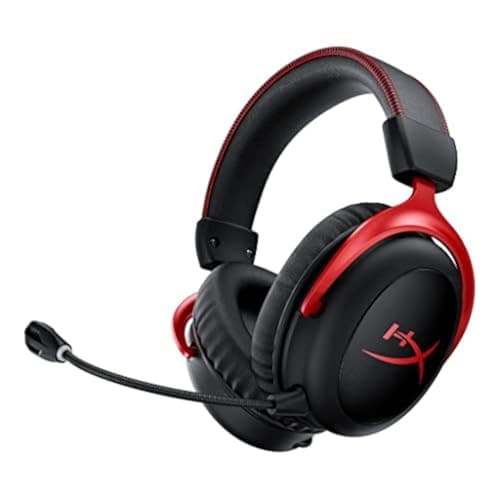
At a glance
- Both list at $150.
- HyperX Cloud II Wireless weighs 300 g and HyperX Cloud Revolver + 7.1 360 g.
- HyperX Cloud II Wireless is rated 60 Ω and HyperX Cloud Revolver + 7.1 30 Ω.
- Both are closed-back.
- Both list a dynamic driver.
- HyperX Cloud II Wireless was released in 2020 and HyperX Cloud Revolver + 7.1 in 2021.
- Listed sensitivity is 98 dB for HyperX Cloud II Wireless and 100.5 dB for HyperX Cloud Revolver + 7.1; the makers' references were not recorded, so the two are not directly comparable.
Frequency response, overlaid
Where they differ
- HyperX Cloud II Wireless has about 5.6 dB more sub-bass than HyperX Cloud Revolver + 7.1.
- HyperX Cloud II Wireless has about 1.0 dB more bass than HyperX Cloud Revolver + 7.1.
- HyperX Cloud II Wireless and HyperX Cloud Revolver + 7.1 are about the same in the mids.
- HyperX Cloud II Wireless has about 1.4 dB more upper mids than HyperX Cloud Revolver + 7.1.
- HyperX Cloud II Wireless has about 4.2 dB more treble than HyperX Cloud Revolver + 7.1.
- HyperX Cloud II Wireless has about 4.9 dB more air than HyperX Cloud Revolver + 7.1.
Curves normalised at 1 kHz. Small differences at the top of the treble vary with placement and should be read loosely.
Specifications side by side
| Specification | HyperX Cloud II Wireless | HyperX Cloud Revolver + 7.1 |
|---|---|---|
| Impedance | 60 Ω | 30 Ω |
| Sensitivity | 98 dB (reference not recorded) | 100.5 dB (reference not recorded) |
| Driver Type | dynamic | dynamic |
| Driver Size | 53mm | 50mm |
| Frequency Response | 15Hz-20kHz | 10Hz-28kHz |
| Weight | 300 g | 360 g |
| Design | Closed-back | Closed-back |
| Wireless | Yes | No |
| Cable | Detachable | Fixed |
| Release year | 2020 | 2021 |
| List price | $150 | $150 |
Specifications are what the makers list; see how audiophila. treats specs, measurements and owner ratings on the methodology page.
Prices
HyperX Cloud II Wireless
MSRP: USD 149.99
USD 132.9 on Amazon · out of stock
HyperX Cloud Revolver + 7.1
MSRP: USD 149.99
USD 129.99 on Amazon · in stock
We like to keep the amps flowing. We could run ads, but we prefer affiliate links—they're what we'd click anyway to dig deeper. Thanks for the support!
More comparisons
- HyperX Cloud II Wireless vs HyperX Cloud Flight S
- HyperX Cloud II Wireless vs HyperX Cloud Flight
- HyperX Cloud II Wireless vs HyperX Cloud III Wireless
- HyperX Cloud II Wireless vs HyperX Cloud Alpha S
- HyperX Cloud Revolver + 7.1 vs HyperX Cloud Flight S
- HyperX Cloud Revolver + 7.1 vs HyperX Cloud Flight
- HyperX Cloud Revolver + 7.1 vs HyperX Cloud Alpha S