
Pros
- Very comfortable for long sessions
- Smooth, friendly sound signature
- Thoughtful design details and usability
Cons
- Treble is too soft for the reviewer's taste
- Heavy on the head
- Not portable
- Earpads and cables are effectively proprietary
A debut headphone from a mic company, with standout comfort and a soft, forgiving sound.
TL;DR
A headphone from a microphone company is not what you would expect, yet the NTH-100 is one of the more carefully thought-out designs of recent years, full of small, useful details.
Comfort stays excellent through long sessions. The sound is too soft for critical mixing, but it is clean and clear enough for everything else, and the smooth tuning avoids harsh spikes.
It is comfortable almost to a fault, and well worth a look.
Specs
Closed-back over-ear
Single 40mm dynamic driver
Frequency response: 5 - 35,000 Hz
Sensitivity: 110 dB/V
Impedance: 32 Ohms
Weight: 350 g (without cable)
What's in the box
RØDE NTH-100 headphones
4 pairs of cable ID set
3.5mm to 6.35mm adapter
2.4m NTH-CABLE (3.5mm TRS to 3.5mm TRS)
Carry pouch
A Bit of Background
RØDE is an Australian firm that made its name with microphones. It started out as Freedman Electronics, and its first big hit was a condenser mic that evolved into the NT-1. Today it is a go-to for affordable, capable gear in filmmaking, podcasting and content creation, and I already have its budget audio interface on my desk.
Costing $150, the NTH-100 looks like a cheaper cousin of Neumann's NDH 20, a headphone designed to pair with your mic, interface and the rest of a recording or streaming setup.
First Impressions
Given my history with RØDE's interface and shotgun mic, I figured the unboxing would be forgettable. It was a bit better than that. Beneath the sleeve and a few cardboard layers, the headphones sit alongside the extras in a carry pouch. It is a nice idea, but the pouch is thin and protects nothing. It is useful for corralling the cable, the quarter-inch adapter and the coloured clips RØDE calls an ID set, and that is about all there is to say.
Design
The box undersold what is going on here. I usually blend design and build into one discussion, but this model has enough going on to treat them separately.
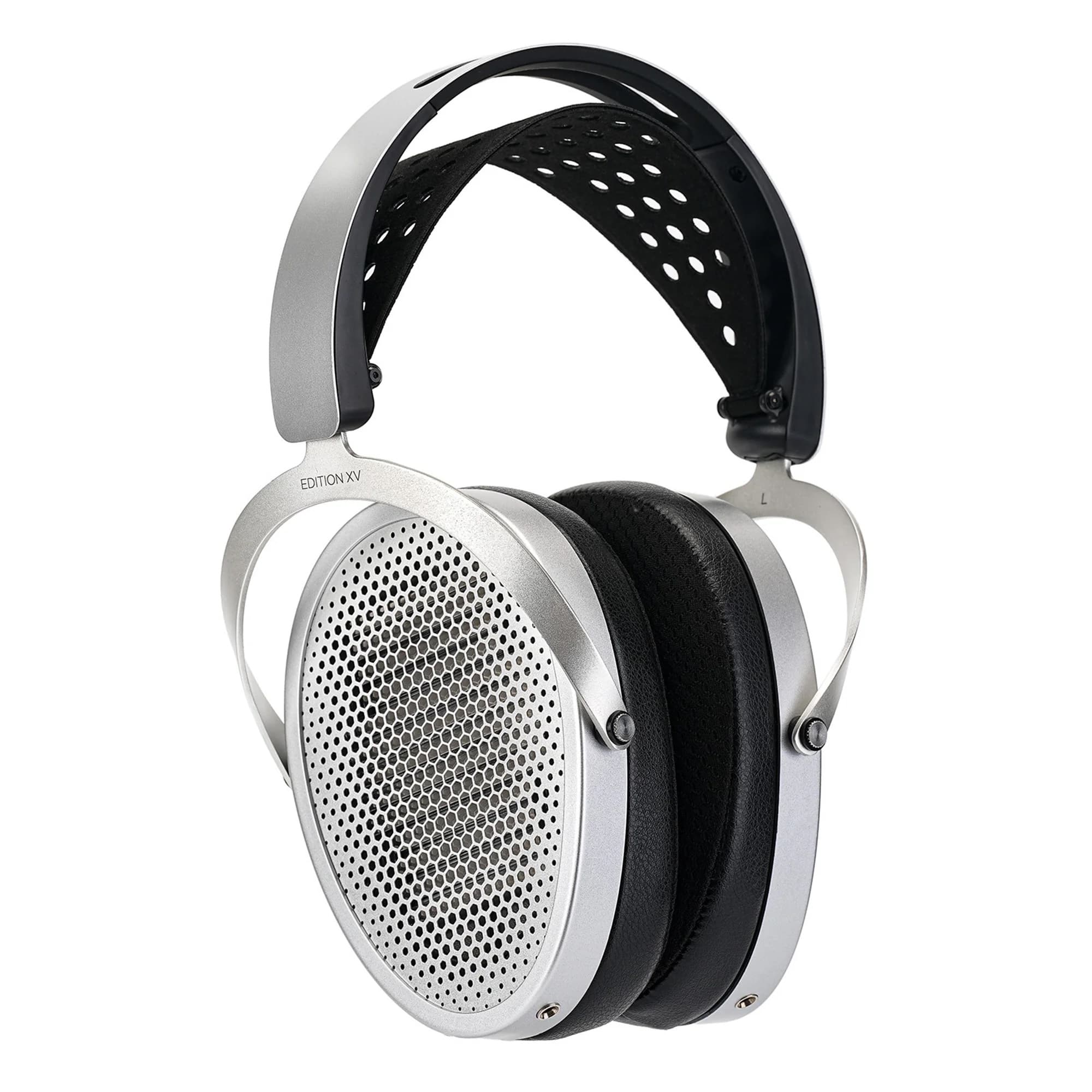
First, the earcup outline: a rounded triangle that follows the ear, with one corner pointing backward, so orientation is obvious immediately. RØDE added several more orientation cues. Each pad is labelled L or R on the inside, the right cup has a red strain relief against a black one on the left, and Braille L and R are moulded above the big Ø logos.
The cable also goes into either earcup. If you are left-handed or your source sits on the right, you avoid draping the lead across your desk.
An optional NTH-MIC, sold separately or bundled in the NTH-100M, turns the set into a headset. I had none to try, so I can only say the concept sounds practical. Altogether, these details show a modern attention to accessibility.
What RØDE left out matters too. Portability is the clear miss. Rivals such as the ATH-M50x and K371 collapse for the bag, but this thick metal headband cannot. It looks intentional, since the company targets comfort for static, at-home creator work, and the 2.4m cable suits a home studio.
The cable connector uses a twist-to-lock collar. Locking is fine in principle, but the collar eats up most of the space around the socket, so despite the standard 3.5mm plug, only RØDE's own cable fits. Pads are similarly closed off. Third parties do not make replacements and RØDE does not sell them directly, so you need to ask support.
The same goes for the little cover over the unused jack, which is surprisingly essential and easy to lose. Closed-backs need a vent to manage pressure, and RØDE used the two input jacks as driver ports. The idle one must be blocked, or the sides release air unevenly and you hear a channel imbalance in level and tonality. The idea is not bad, but a tiny silicone plug is a fragile fix.
Build Quality
"Dense" was my first impression on lifting them out. At 350 grams they are heavy for studio headphones, thanks to largely metal construction, and everything about them suggests they could survive anything.
Long-term durability worries me more. Owner reports describe the FitLok adjuster snapping within months, much as happened with the K371-BT I tested before. That is the twist-to-release part that lets the cups slide and then locks them. The part is largely plastic, so it flexes and splits under load sooner than the metal band and hinges around it.
Mine has been fine. I used it daily for hours, as my main pair, for around three months before writing this, and nothing happened. It could still go later.
RØDE answered by extending the warranty from two years to lifetime coverage. Whether that concedes a design flaw, I cannot say, but I welcome it.
Fit and Comfort
The exposed wiring and chunky metal suggest an uncomfortable headphone, and 350 grams does become noticeable eventually, though it is far from an Audeze LCD-XC. In reality, over roughly a hundred hours I only removed them to stretch or when my ears warmed up. They rank among the most comfortable I have used.
Credit goes to weight distribution and materials. Downward headband pressure and inward clamp are well balanced, so the mass fades into the background.
The pads steal the show. They are firmer than other memory foam pads I know and recover faster, which, to me, gives support that keeps load off the top of my head. CoolTech gel and Alcantara sweeten things further.
Keep expectations measured. This is not the deep-cushion luxury of a Meze Empyrean or a recliner, nor the feather-light feel of an AKG K701 or Beyerdynamic R70x. It is firm, cushioned and supportive, rather like a sports car seat with Alcantara trim.
Sound Quality
My preference is for bright, sparkly, airy and clear treble. My everyday pair at the desk is the AKG K701, used for Twitch streams and video essays alike. So the NTH-100's warm tilt and very soft treble caught me off guard.
After a long spell as my main pair, I still do not love the signature. But I understand the approach and respect how the headphones perform within it.
Bass
Bass is even-handed for a closed-back studio model. The warmer mids make it centre on the mid-bass, yet it holds back its punch and never delivers real impact.
In "Re:Re:" by Asian Kung-Fu Generation, the bass guitar loses its identity as an instrument and becomes a rumbling drone beneath the song. It lacks the slam I expect at this level, and at first I did not know what to make of that.
Midrange
Later I found a better description: these are midrange-focused headphones.
It became clear with "Kansaete Kuyashiiwa" by ZUTOMAYO. On most headphones the vocals sound thin and fragile and get overrun when the band enters. Here the voice gains body and sits further forward. I suspect the treble roll-off smooths outlines and lets the mids stand out.
Treble
Soft treble is typically there to tame spikes that bother many people. With a big dip near 7 to 8 kHz, sibilance is essentially absent.
That is welcome, but a further dip and roll-off beyond 12 kHz push the sound toward muffled and veiled. It is not missing upper frequencies altogether, as cymbals, claps and percussion stay audible. Yet next to other headphones, vocals like Ben&Ben's "Pagtingin" lose notable bite and detail, especially soft S, P, K and T sounds.
Soundstage
Here I have the least to add. A closed-back has limited room to suggest space, and these try their best. In games and on "Arthur's Theme" by Christopher Cross, the stage seems narrow beside a DT770 or K371, although the K371 is something of an outlier.
More significantly, the roll-off lets things smear together, hurting imaging and making them unsuitable for mixing.
Value
Its $150 price lands it among many rivals, old and new, chiefly Beyerdynamic's DT770 Pro, the ATH-M50x from Audio-Technica, and AKG's K361 and K371.
Predicting what suits any individual is difficult. In my case, the soft signature is the reason it falls short of a must-buy. Still, given decent sound and superb ergonomics, I think most buyers will be happy using it to create or consume content.
Conclusion
First attempts are usually messy and imperfect, a trial run that shows what to improve. Nobody expects to succeed immediately. RØDE did.
Building a headphone from nothing for a debut is impressive, and being so competitive under $200 is more so. Superb comfort, considered design and a smooth, agreeable sound make one of the freshest, most versatile studio headphones I have seen lately.
Some fixes remain: replaceable cables and pads, sturdier FitLok parts, and a shape that fits larger heads, plus a sound that is a touch too dull for critical listening. But as a monitoring headphone it fulfils its brief and goes beyond it.
Better ones will come. For now the NTH-100 exists, and I would say it is enough.