
Neumann KH 150 Speakers
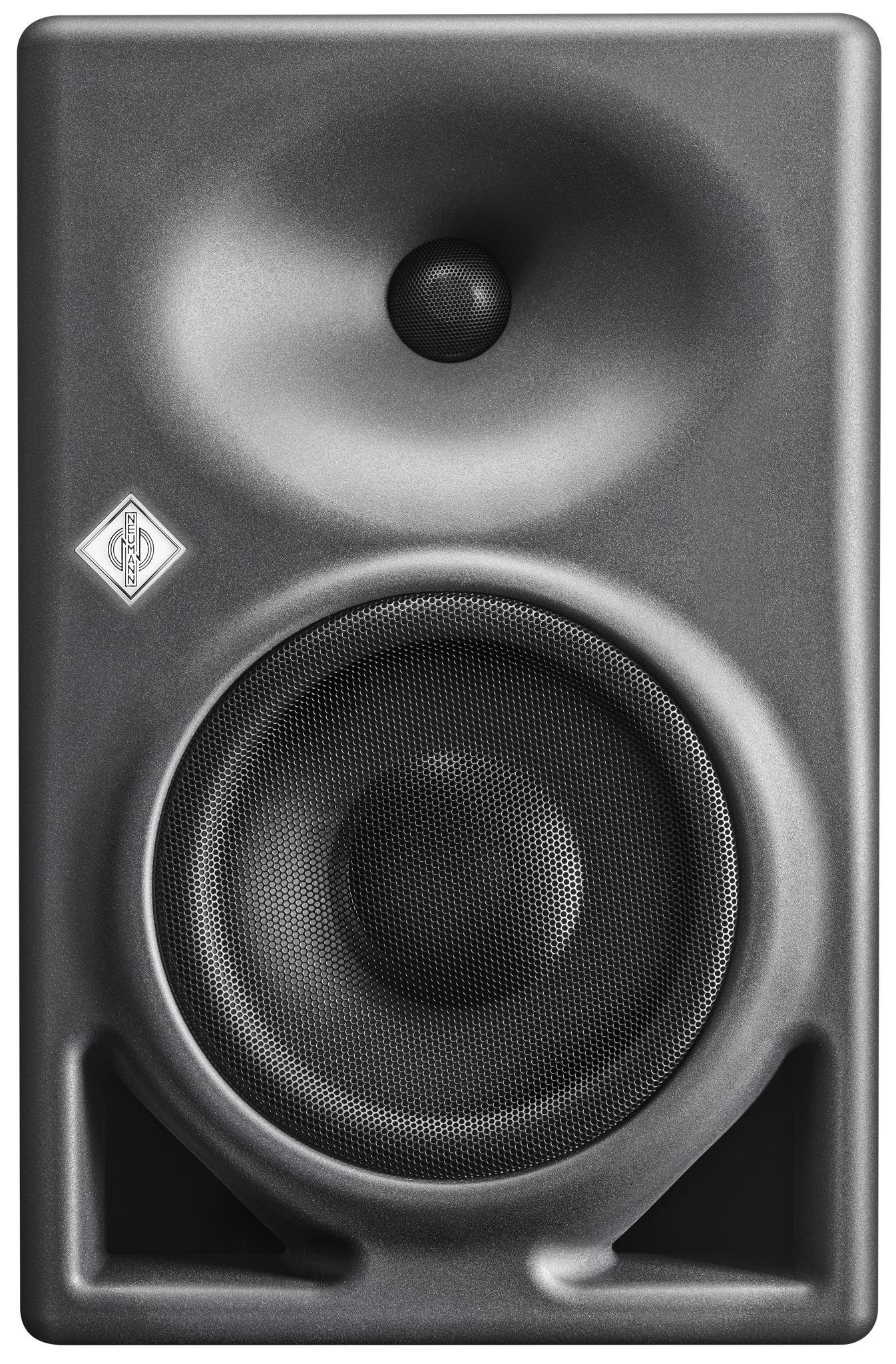
Neumann's KH 150 is a bi-amplified two-way nearfield studio monitor with DSP and a 165 mm woofer. Its amplifiers deliver up to 145 W to the woofer and 100 W to the tweeter.
No members own one yet. Own one? Add it to your collection
Rating
—
be the first to rate
Owners
0
be the first
About
About the Neumann KH 150
Free-field frequency response runs from 39 Hz to 20.4 kHz within ±3 dB, from a bass reflex cabinet with its ports at the front. It has bass, low-mid and treble equalisation controls. The first track played on any new system is chosen with more care than most playlists ever get.
Analogue input is balanced XLR, and there is a digital S/PDIF input and output on RCA. Its DSP works with the separately sold MA 1, which calibrates it for the room and listening position.
It weighs 8.0 kg and comes in anthracite or white. Auto-standby cuts power use to 0.3 W when it has not been used for a while.
Good for
- Rooms calibrated with Neumann's MA 1
- Surround and immersive monitor setups
- Sources with an S/PDIF output
Less good for
- Analogue sources with only RCA outputs
- Listening seats beyond 6.0 m away
Specs
Price tracker
Price history
No current Amazon price · new and used prices, checked daily. See today's price on Amazon ↗
New, lowest
$1,699
30-day low
- New, lowest price
- Used, lowest listing
$1930$1580$1230
Nov 2024Nov 2025Nov 2026
Where to buy
Shop on Amazon
Neumann KH 150
Speakers
See today's price on Amazon ↗View on Amazon
As an Amazon Associate audiophila. earns from qualifying purchases.
We like to keep the amps flowing. We could run ads, but we prefer affiliate links—they're what we'd click anyway to dig deeper. Thanks for the support!