
Rotel A11MKII Amplifier
A Rotel integrated amplifier delivering 50 Watts per channel of Class A/B power into 8 ohms, with aptX HD Bluetooth. Inputs include three line-level RCA, coaxial, optical and a Moving Magnet phono stage.
No members own one yet. Own one? Add it to your collection
Rating
—
be the first to rate
Owners
0
be the first
About
About the Rotel A11MKII
It has a Texas Instruments 32-bit/384kHz digital to analog converter, and the digital inputs take SPDIF LPCM up to 24-bit/192k Hz. Bluetooth supports aptX HD and AAC, and a linear power supply with a Rotel-built toroidal transformer feeds the amplifier. A phono stage and Bluetooth in the same box let the format debate carry on under one roof.
The front panel carries bass, treble and balance controls and an 1/8” headphone jack with a dedicated headphone amplifier circuit. The included IR remote drives a motorised analogue volume controller. It weighs 6.8 kg (15 lbs.) and comes in black or silver.
Good for
- Both analogue and digital sources
- Private headphone listening
- Volume control from the listening position
Less good for
- Multichannel cinema decoding without external equipment
Specs
Technical specs
Where to buy
Shop on Amazon
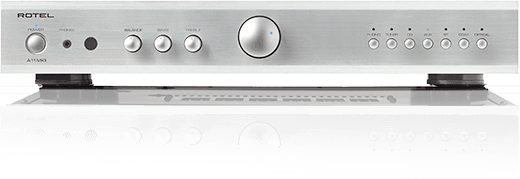
Rotel A11MKII
Amplifiers
See today's price on Amazon ↗View on Amazon
As an Amazon Associate audiophila. earns from qualifying purchases.